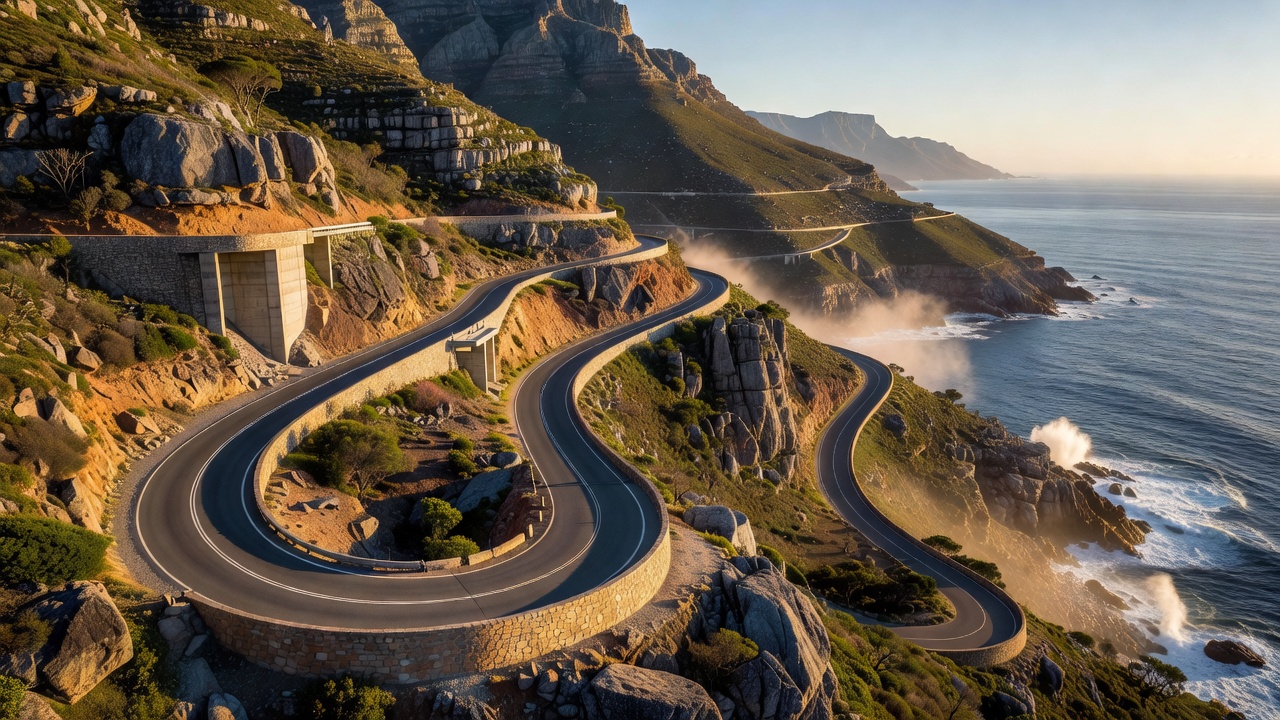
Locally known as "Chappies," Chapman’s Peak Drive is widely regarded as one of the most spectacular marine drives in the world. Nestled on the Atlantic Coast of the Cape Peninsula in South Africa, it links the seaside suburb of Hout Bay to the sweeping white sands of Noordhoek. Though it is a surprisingly short journey, the sheer verticality of the cliffs and the engineering required to carve a road into them make it an essential automotive pilgrimage.
Overview and Route
The road is an engineering triumph, originally constructed between 1915 and 1922. The 9-kilometre route boasts exactly 114 curves, skirting the near-vertical rocky flank of Chapman's Peak, which drops dramatically into the churning Atlantic Ocean below. The route operates as a toll road; the funds collected are essential for maintaining the extensive rockfall protection measures, including heavy mesh catch-nets and half-tunnel concrete overhangs that keep the road safe.
While you can drive it in either direction, starting in Hout Bay and heading south towards Noordhoek is often preferred. This direction places your car on the ocean side of the road, offering uninterrupted views and easier access to the numerous designated picnic spots and viewing bays.
Key Highlights
The primary attraction is the drive itself, offering panoramic views of Hout Bay and the Sentinel peak. About halfway along the route is the main viewing point, perfectly situated to watch the sun dip below the Atlantic horizon. Many locals and tourists pack a picnic basket to enjoy at these vantage points during the golden hour. At the southern terminus, drivers are greeted by the vast, pristine expanse of Noordhoek Beach, famous for horseback riding and its wild, unswimmable waters.
Driving Tips and Vehicle Choice
Because the route is relatively short and well-paved, any reliable passenger vehicle is perfectly suitable. The speed limit is kept strictly low, both for safety and to allow drivers to appreciate the monumental scenery. Cyclists heavily frequent the route, particularly on weekends and early mornings, so drivers must be constantly vigilant and prepared to overtake slowly and safely.
Crucially, the road is subject to closure during severe weather. High winds or heavy rain increase the risk of rockfalls, prompting authorities to close the gates. Always check the official Chapman's Peak Drive website or local signage for real-time status before heading out.
Best Time to Visit
Late afternoon is arguably the greatest time to experience Chapman’s Peak, specifically to catch the sunset. From a seasonal perspective, the South African summer (November to March) offers beautiful, clear days, although the "Cape Doctor" (a strong south-easterly wind) can sometimes be fierce. Winter (June to August) brings lush green foliage to the mountainside and dramatic moody skies, provided the road isn't closed due to rain.
Pros and Cons
- Pros: World-class sunset viewing; exceptionally maintained road surface and safety features; easily accessible from central Cape Town.
- Cons: A toll fee is required; the route is short, making it more of an excursion than a full day's road trip; prone to sudden closures during bad weather.