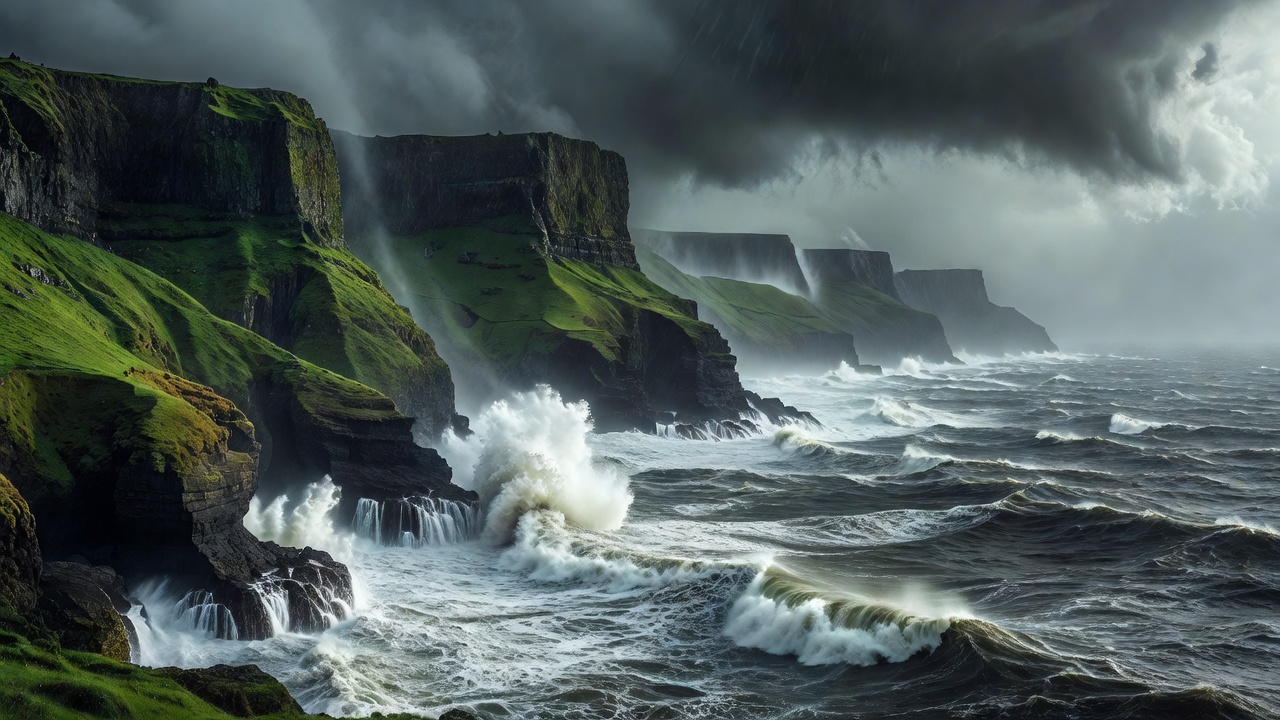
The Wild Atlantic Way is not merely a single road, but an expansive, signposted network of coastal routes tracing the entire western edge of Ireland. Spanning an astonishing distance from the Inishowen Peninsula in County Donegal down to Kinsale in County Cork, it stands as one of the longest defined coastal touring routes in the world. It offers a deep dive into traditional Irish culture, dramatic seascapes, and melancholic, poetic landscapes.
Overview and Route
Attempting the entire route in one go requires a significant time commitment; most travelers choose to focus on specific regions. The route is clearly marked with distinctive blue zig-zag signs. Driving north to south or south to north is entirely up to personal preference, as both directions offer equally engaging views.
The terrain is highly varied. You will encounter wide sweeping coastal roads, but you will also frequently find yourself navigating single-track boreens (narrow rural roads) flanked by high stone walls or thick hedgerows. The route pushes right to the geographic edges, hugging peninsulas and plunging deep into remote bays.
Key Highlights
County Clare hosts the iconic Cliffs of Moher, a towering wall of shale and sandstone that drops vertically into the Atlantic Ocean. While heavily visited, their scale is undeniably profound. Further south, the Ring of Kerry offers a spectacular, self-contained loop featuring mountains, lakes, and staggering coastal views. For a more remote and desolate beauty, the Connemara region in County Galway showcases a hauntingly beautiful landscape of bogs, loughs, and the Twelve Bens mountain range.
Driving Tips and Vehicle Choice
Due to the frequent occurrence of narrow, single-track roads, renting a smaller vehicle is highly advantageous. Navigating past an oncoming tractor or a flock of sheep is a daily occurrence, and smaller cars make reversing to passing places far easier. Ireland drives on the left.
The weather on the west coast is famously unpredictable. It is entirely possible to experience bright sunshine, heavy rain, and gale-force winds in a single afternoon. Drivers must remain cautious, particularly on exposed coastal headlands where crosswinds can be severe. Take your time; the charm of this route lies in lingering in small villages and pubs, not rushing to a destination.
Best Time to Visit
The summer months (June to August) provide the most reliable weather, the longest daylight hours (vital for maximizing sightseeing), and fully open tourist facilities. However, late spring (May) and early autumn (September) are fantastic times to travel if you want to avoid tour buses on the narrower peninsulas, though you should pack quality rain gear.
Pros and Cons
- Pros: Authentic cultural experiences in remote villages; immense, rugged natural beauty; clearly marked and easy to navigate via signage.
- Cons: Weather can be deeply unpredictable and frequently wet; narrow roads require constant concentration; completing the entire route requires a very long vacation.