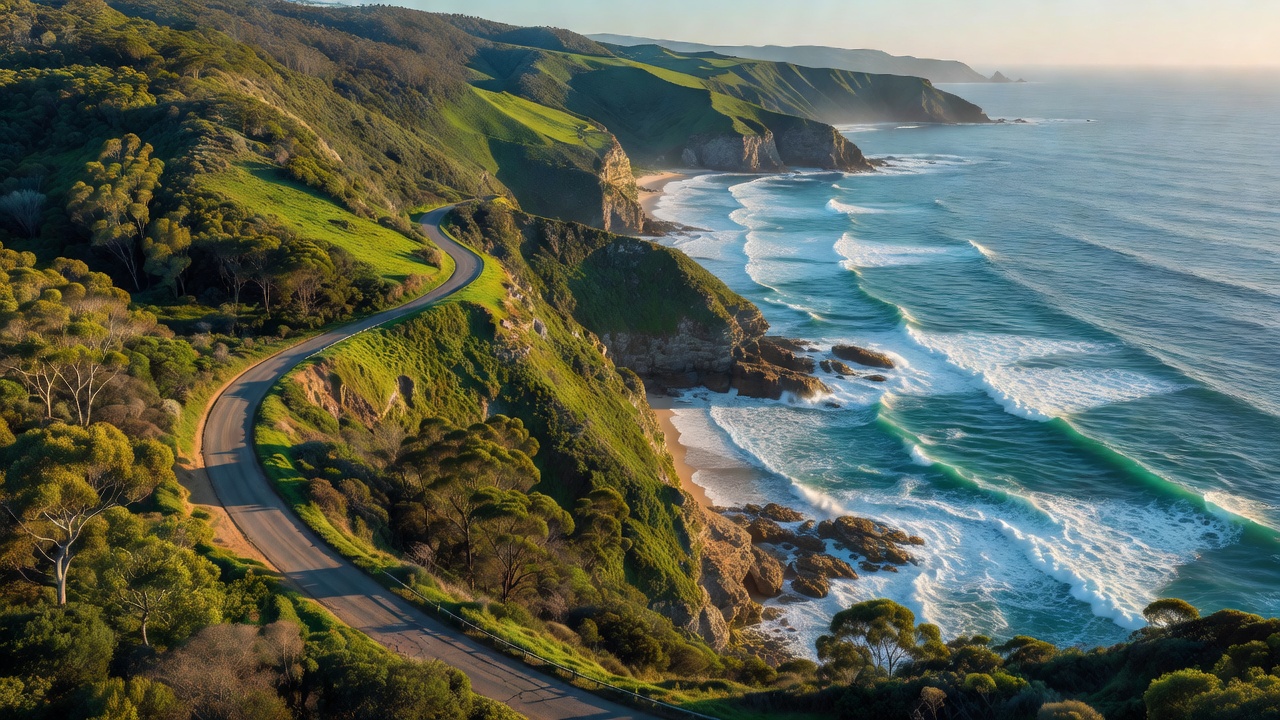
Stretching along the south-eastern coast of Australia in Victoria, the Great Ocean Road is a spectacular testament to both nature's raw power and human resilience. Built by returned soldiers between 1919 and 1932, the road is officially dedicated to casualties of World War I, making it the world's largest war memorial. Today, it serves as a gateway to one of the most geographically diverse and visually stunning coastal environments on Earth.
Overview and Route
The road officially begins in Torquay, a renowned surfing hub, and concludes in Allansford, near Warrnambool. The drive is typically broken down into three distinct sections: the Surf Coast, the Otway Ranges, and the Shipwreck Coast. Driving from east to west (Melbourne towards Adelaide) is the most popular choice, as it places your vehicle in the left lane, closest to the ocean side, allowing for safer pull-offs and superior views.
The route transitions dramatically. It begins with gentle curves alongside sandy beaches, dives inland through dense, ancient temperate rainforests, and emerges back onto the coast to trace the edge of sheer limestone cliffs battered by the Southern Ocean.
Key Highlights
The undisputed crown jewel of the Great Ocean Road is the Twelve Apostles. These magnificent limestone stacks, isolated in the churning sea, were formed by millions of years of erosion. Sunset and sunrise offer the most magical lighting for viewing them, casting deep orange and purple hues across the rock faces. Nearby, the tragic history of the Shipwreck Coast is highlighted at Loch Ard Gorge, a breathtaking inlet with steep, smooth walls and a dark maritime past.
For wildlife enthusiasts, a slow drive through the Kennett River area almost guarantees sightings of wild koalas sleeping in the eucalyptus trees. Further along, the dense canopy of Great Otway National Park offers stunning walks among giant tree ferns and cascading waterfalls.
Driving Tips and Vehicle Choice
The Great Ocean Road is completely paved and well-maintained, making it suitable for any vehicle, from a compact rental to a large motorhome. In Australia, vehicles drive on the left side of the road. Because the route is a popular tourist destination for international drivers, patience is key, and it is crucial to remain vigilant of drivers drifting over the centre line on tight bends.
Keep a sharp eye out for wildlife, particularly kangaroos and wallabies, which are highly active near the road at dawn and dusk. Fuel is readily available in the larger towns like Lorne, Apollo Bay, and Port Campbell.
Best Time to Visit
The Australian summer (December to February) offers the warmest weather for beach activities, but it brings massive crowds and peak accommodation pricing. The shoulder seasons of spring (September to November) and autumn (March to May) offer a much better balance of mild weather and quieter roads. Winter can be cold and deeply blustery, though the dramatic, stormy seas crashing against the limestone cliffs offer their own stark, wild beauty.
Pros and Cons
- Pros: Incredible geographical diversity; excellent wildlife spotting opportunities; wide, well-maintained roads suitable for all vehicles.
- Cons: The main attractions, like the Twelve Apostles, can feel overcrowded; summer heat can be intense and brings bushfire risks; limited passing lanes can lead to slow caravans dictating the pace.